

On June 5, the Seminar on Mayoral Governance for Croatia, organized by the MOFCOM Training Base for International Business Officials (Shanghai) of Shanghai Business School (SBS), conducted field visits to the Xuhui Hengshan Road-Fuxing Road Historical and Cultural Block and the Shanghai Cultural and Tourism Digital Intelligence Development Center. From historical block preservation and renewal to innovative practices in digital governance, the 19 officials from the Croatian Parliament, multiple cities, and relevant institutions gained a multi-dimensional understanding of Shanghai's exploration and experience in advancing urban governance modernization.
For many of the Croatian officials visiting China for the first time, the day's field visits presented two seemingly different yet closely interconnected urban development scenarios: historic buildings and urban memories beneath century-old plane trees, and a smart governance platform aggregating vast amounts of real-time data. How Shanghai strikes a balance between preservation and development—from cultural heritage to technology-enabled empowerment—became a focal point of interest for the officials.
The Hengshan Road-Fuxing Road Historical and Cultural Block is one of the largest and best-preserved historic areas in central Shanghai, serving as an important practical example of urban renewal. Strolling along Wukang Road, the historic buildings, public spaces, and distinctive commercial offerings beneath the shade of plane trees intertwine to create a development path where old urban areas are revitalized. In front of the Wukang Building, the officials listened attentively to presentations on historic building preservation, block governance, and urban renewal, frequently stopping to take photos and engage in discussion. The organic integration of bookstores, cafés, cultural spaces, and the daily life of local residents along the route allowed the officials to experience firsthand the coordinated relationship between the preservation of historical and cultural heritage and the renewal of modern urban functions.
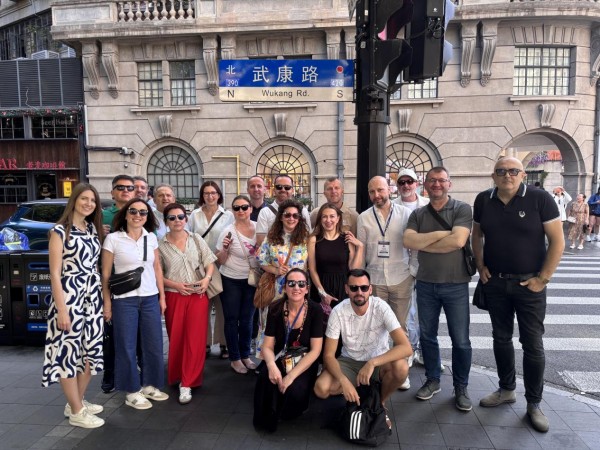
(Photo: Croatian officials posing for a group photo on Wukang Road)
"What impressed me the most is that this place has not lost its vitality due to the preservation of historic buildings," said Ivan, a member of the Croatian Parliament. In many countries, historic preservation and urban development are often seen as conflicting priorities, yet Shanghai has found a development path that balances cultural heritage with economic vitality. "This area has preserved the city's memory while also creating new public and commercial value. This experience offers important lessons for many historic urban districts in Croatia."
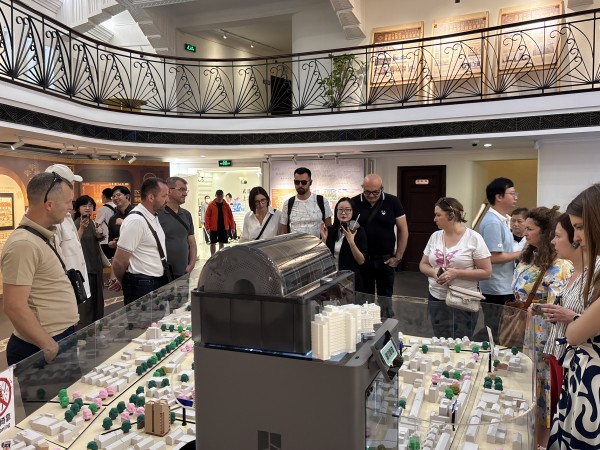
(Photo: Croatian officials listening to a presentation on the design concept of the Hengshan Road-Fuxing Road Historical and Cultural Block)
If the Hengshan Road-Fuxing Road Historical and Cultural Block represents the historical dimension of urban development, the Shanghai Cultural and Tourism Digital Intelligence Development Center presents a vision of the future of urban governance.
In front of the "Integrated Urban Operation Platform"—hailed as the "smart brain" of Shanghai's cultural and tourism governance—the officials were drawn to the real-time updating big data system. Data on tourist flows at scenic spots, the operation of cultural venues, and visitor service support were dynamically displayed on the large screen. Staff provided a detailed introduction to functions such as data aggregation, risk alerts, emergency dispatch, and operational management, allowing the officials to see firsthand how digital technology is deeply integrated into every aspect of urban governance. Among the systems showcased, particular attention was drawn to "Hu Xiaoyou", an urban life agent officially launched in 2025. This platform integrates cultural and tourism resources and service information across the city, using AI technology to provide one-stop services for residents and visitors alike. It is widely regarded as a significant innovative practice in Shanghai's smart cultural and tourism development.
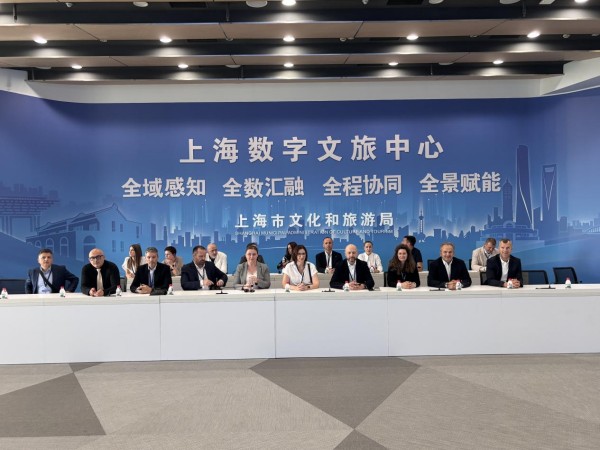
(Photo: Officials visiting the Shanghai Cultural and Tourism Digital Intelligence Development Center)
Kruno, a member of the City Council of Vukovar, Croatia, clearly stated during the exchange session that the most valuable lesson from Shanghai lies in its effective integration and sharing of data resources. "What we are seeing is not just data collection, but how data serves urban management and public decision-making, making technology truly benefit residents and visitors alike."
Bojan, a member of the City Council of Split, Croatia, also expressed a strong interest in the platform's professional operating model. He noted that as the digital transformation of cities around the world continues to deepen, how to use digital technology to improve public services has become a common challenge for cities across countries. "Shanghai has accumulated rich experience in digital governance. I hope that we can further strengthen exchange and cooperation in the future, bringing more of China's experience to Croatia."
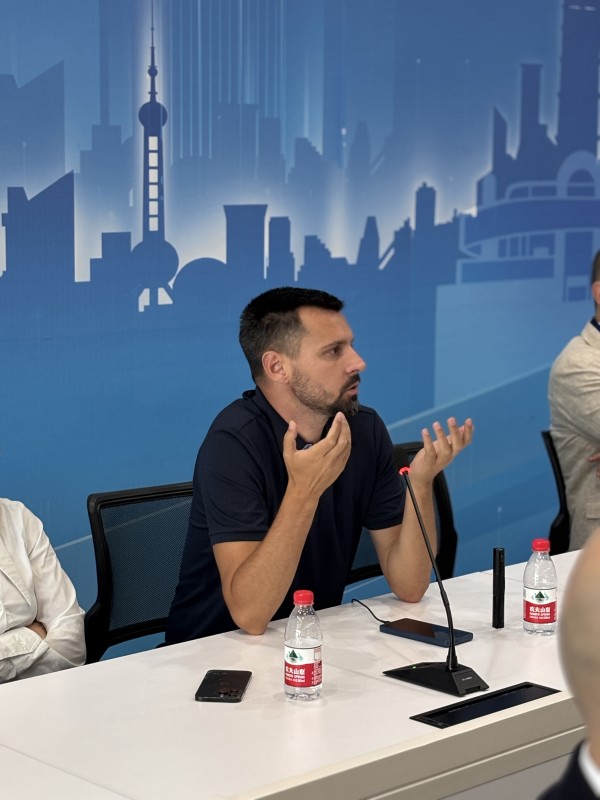
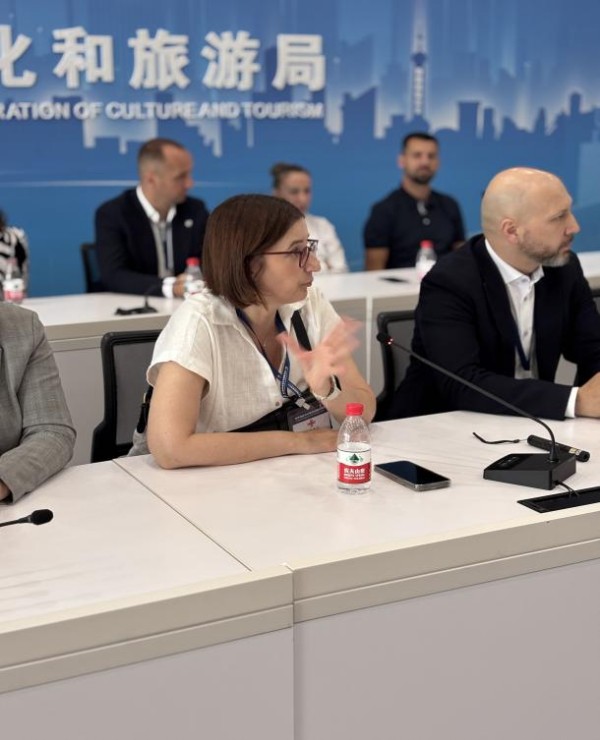
(Photo: Croatian officials asking questions)
During the site visits, "balance" emerged as one of the keywords most frequently mentioned by the officials. From the preservation and adaptive reuse of historic buildings in the Hengshan Road-Fuxing Road Historical and Cultural Block to the use of AI and big data to enhance governance efficiency at the Digital Intelligence Development Center, what Shanghai has demonstrated is not the achievement of a single sector, but rather a governance philosophy that harmonizes historical preservation with innovative development.
"In the morning, we saw the city's past; in the afternoon, we saw the city's future," reflected a Croatian local government official during the exchange. "What is most impressive about Shanghai is that it allows the past and the future to coexist and to reinforce each other."
The officials collectively expressed that through this field visit, they not only experienced the development vitality of Shanghai as an international metropolis, but also gained a deeper understanding of China's practical achievements in areas such as historical and cultural preservation, urban renewal, and digital governance. Looking ahead, they hope to further strengthen exchange and cooperation with China in fields such as urban governance, cultural heritage protection, smart city development, and public service innovation, working together to explore new pathways for sustainable urban development.
Written by: Guan Rui
Photograph by: Sun Xuhan, Li Tianxing
Reviewed by: Chen Wei