To strengthen value-based education, guide international students to understand China's development story, grasp China's development philosophy, and cultivate their bond with China, the College of International Education held a series of educational courses on China's national conditions for all international students on the morning of June 5. This course focused on the Belt and Road Initiative. The course was delivered by Chen Wei, Secretary of the CPC branch of the College, with all international students participating in the learning session.
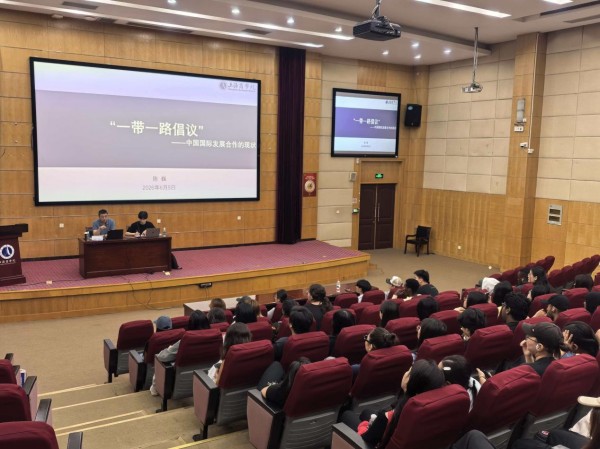
(Photo: China's National Conditions Thematic Education Session)
During the course, Chen Wei systematically explained the historical origins, the Silk Road spirit, and the contemporary value of the Belt and Road Initiative from three dimensions: historical background, core connotations, and practical outcomes. Drawing on the broader trends of economic globalization, the opportunities and challenges facing global governance, the shifting landscape of global industrial transfer, China's development achievements, and the evolution of the international order, he provided an in-depth analysis of the historical inevitability and practical necessity of the Belt and Road Initiative. He pointed out that the Belt and Road Initiative, upholding the core Silk Road spirit of peace and cooperation, openness and inclusiveness, mutual learning, and mutual benefit, is an important practical vehicle for China's efforts to build a community with a shared future for mankind, as well as a high-quality international public good that benefits the world and supports the shared prosperity and development of all countries.
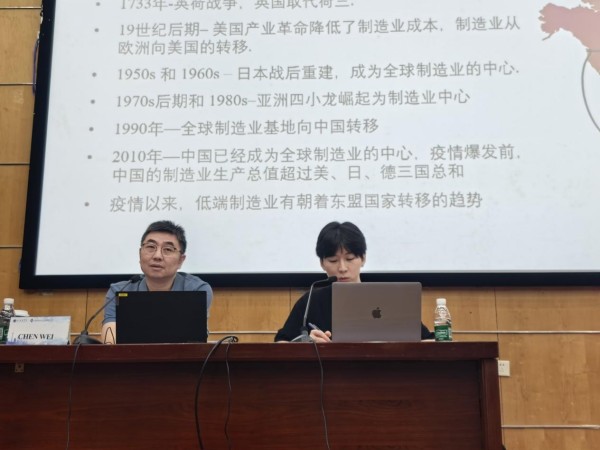
(Photo: Chen Wei introducing the historical development background)
This lecture closely followed the "Five Connectivity" pillars—policy coordination, facilities connectivity, unimpeded trade, financial cooperation, and people-to-people bonds—and drew on multiple landmark cooperation projects such as the China-Pakistan Economic Corridor, the China-Laos Railway, the Jakarta-Bandung High-Speed Railway, and the Port of Piraeus. Supplemented by detailed data and vivid practical cases, the lecture presented the development dividends and improvements to people's livelihoods brought by the Belt and Road Initiative to partner countries in a comprehensive, multi-dimensional manner, allowing international students to intuitively and deeply appreciate the global significance of the China approach and the sense of responsibility befitting a major country.
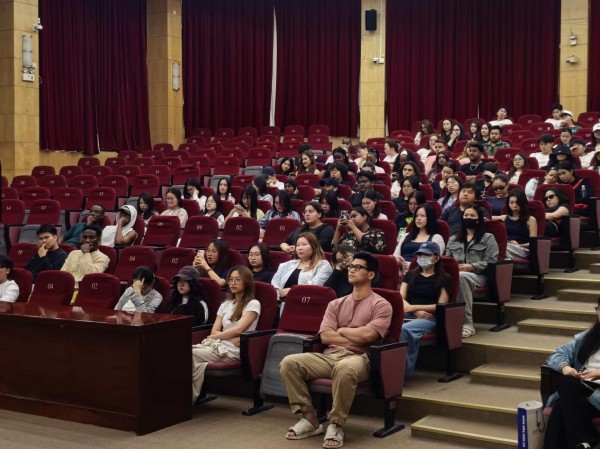
(Photo: International students listening attentively and taking notes on key data)
Chen Wei emphasized that the Belt and Road Initiative always adheres to the core principles of extensive consultation, joint contribution, and shared benefits, providing a high-quality platform for young people from around the world to engage in mutual learning, exchange, and shared growth. He encouraged all international students to cherish their study opportunities in China, take the initiative to become bridges and ambassadors for friendly exchange between China and their home countries, and bring back to their home countries their genuine observations, personal experiences, and authentic understanding of China, contributing their youthful energy to dialogue between civilizations and the promotion of international friendly exchanges.
The interactive segment of the class was lively, with international students actively asking questions and engaging in deep reflection based on the content they had learned. In response to a question from an international student about "how developing countries can seize opportunities for cooperation with China to improve the quality and efficiency of bilateral trade", Chen Wei provided a detailed answer. He stated that China's Belt and Road Initiative and the Four Global Initiatives effectively broke down barriers to connectivity and development among countries, creating vast space for cooperation. Developing countries can leverage bilateral policy coordination mechanisms to smooth trade systems such as customs clearance and cross-border logistics, deeply participate in cross-border economic cooperation, and integrate into the global economic landscape. They can also, based on their domestic resource advantages and market demands, utilize international economic and trade platforms such as the China International Import Expo to promote their distinctive, high-quality products to enter the Chinese market, achieving precise alignment of supply and demand. At the same time, they should actively embrace new economic models such as the digital economy and cross-border e-commerce, make good use of various cross-border financing support policies, and expand channels for cooperation with China in all respects.
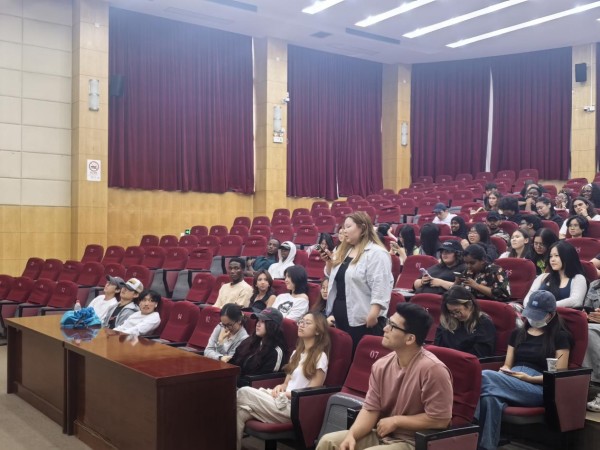
(Photo: International student asking a question)
In response to a question from an international student asking whether "the Belt and Road is an economic project or a geopolitical policy", Chen Wei responded that the Belt and Road is a comprehensive development policy with economic, social, and international dimensions. Its core objective is to promote global multilateral economic cooperation and shared development, with impacts spanning multiple direct and indirect areas of economic development. This policy has established a multi-level overall planning system covering global, national, and regional levels, ensuring the coordination, unity, and coherent implementation of cooperation policies. It builds a solid foundation for cooperation through people-to-people bonds and cultural exchange, enhancing mutual understanding, trust, and confidence among countries. Relying on the three core areas of trade, finance, and infrastructure development, it breaks down barriers to the flow of talent, goods, capital, and information, empowering the high-quality economic and social development of all countries in all respects.
This national conditions education activity organically integrated theoretical instruction, values-based guidance, and cultural immersion. It not only helped international students systematically, comprehensively, and objectively understand China's development path and international cooperation philosophy but also cultivated their deep bond with China through an immersive model of value-based education, consolidating the foundation of mutual understanding, trust, and friendship between Chinese and international youth.
Going forward, the CPC branch of the College of International Education will continue to adhere to the core mission of value-based education, continuously innovating the forms of education in national conditions, enriching its content, and expanding its dimensions. It will guide international students to deeply perceive China, integrate into China, and develop a love for China, helping them grow into communicators of friendly Sino-foreign exchange and promoters of multilateral cooperation and development, injecting youthful energy into the shared development of China and other countries.
Written by: Zhang Wen
Photograph by: Unattributed
Reviewed by: Chen Wei